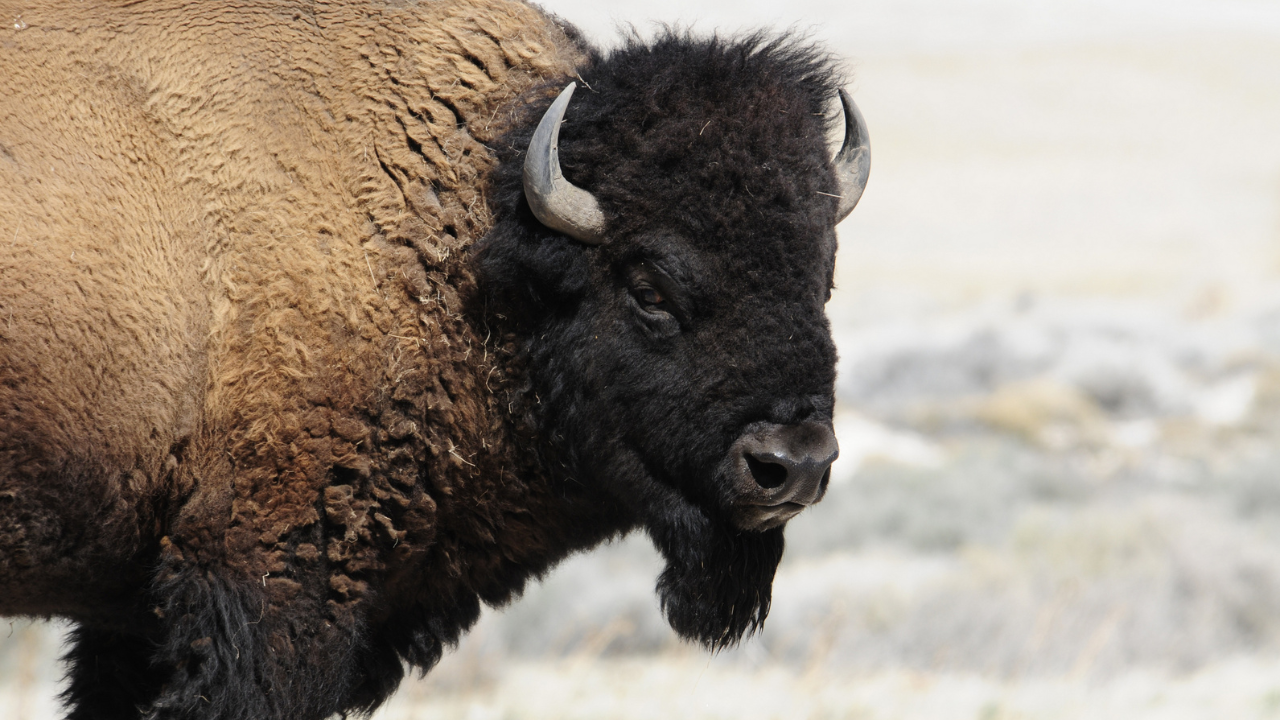
Buffalo know something instinctively that we don’t – And it might just change how you face the storms in your life.
I learned a fascinating fact from watching a TEDx talk by one of my best friends the other day:
When a storm or blizzard approaches, buffalo turn and run directly into the storm, while domestic cattle and many other animals turn away from it.
Wildlife experts call it the “Quickest Path” theory. It’s an adaptive survival mechanism that allows buffalo to get through the storm and emerge on the other side more quickly instead of lingering in it.
By meeting the weather head-on, they keep snow and freezing rain from building up under their thick neck fur, helping protect their bodies from losing too much heat.
It’s an irresistible metaphor for facing life’s challenges, heartaches, past traumas, and fears directly instead of spending years trying to outrun them.
Because when we run from pain, it doesn’t disappear.
It accumulates.
Like frost gathering around your heart.
Like weight your spirit was never meant to carry.
We all go through storms.
We all carry pain, grief, disappointment, and emotions we’d rather not feel.
The question is:
Are you facing them?
Or are you still running?
Are you the buffalo or the bull?
Gap Insight:
Running from present pain—or a painful past—keeps you stuck there. Unprocessed emotions become log jams that halt both your growth and your freedom.
The Moment My Life Changed
I’ll never forget the moment I was forced to face the biggest storm of my life: my mother’s passing.
She had something called Multiple System Atrophy, an offshoot of Parkinson’s disease that attacks movement, dexterity, and eventually many of the body’s internal systems.
We thought we had at least another year.
Then I got a call one morning at 7:30 a.m. telling me she had passed in her sleep a few hours earlier.
As I sat beside her empty bed, where she had been only the night before, the reality of our separation began to sink in.
And I cried.
And cried.
And cried.
The emotion came from somewhere deep inside me. I couldn’t control it. It felt like giant waves pulling me into an abyss.
Then something unexpected happened.
I had an epiphany that permanently changed me.
I realized I had spent most of my life avoiding painful emotions.
But as I sank deeper into grief, I suddenly felt connected to her.
It was as if the pain itself was an acknowledgment of my love for her.
My gratitude for her.
My connection to her.
And in that moment, pain transformed into love.
Love for her.
And strangely, love for myself too.
That’s when I realized I no longer needed to fear painful emotions.
They weren’t dangerous.
They weren’t something to avoid.
They were cleansing.
They were healing.
They were freeing.
I was channeling the buffalo.
Walking directly into the storm and finding a peaceful clearing on the other side.
From that moment forward, whenever emotions surfaced—whether about my mother or anything else in my life—I stopped and felt them.
I still do.
It’s now one of the cornerstones of what I teach leaders and others:
Feel your emotions in the present moment.
That includes grief.
Sadness.
Anger.
Hurt.
Disappointment.
Not because it’s enjoyable.
Because on the other side of the storm you’ll often find relief, peace, and most importantly, freedom.
Gap Insight:
Most of us are discouraged from feeling our emotions from a young age. By allowing yourself to feel them, you’re overcoming decades of unconscious conditioning—and rewriting the programming that stands between you and genuine freedom.
3 Ways to Process Any Emotion
This is a simple framework I use often to process emotions and find the clearing on the other side.
1. Acknowledge the emotion.
Most of us bury, suppress, distract ourselves from, or rationalize our emotions instead of confronting them.
The first step is simply acknowledging that it’s there.
Anger.
Hurt.
Betrayal.
Frustration.
Boredom.
Despair.
Depression.
Name it if you can.
And if you can’t, that’s okay too.
Simply acknowledge the energy that’s present within you.
2. Feel it deeply and intentionally.
Once you’ve acknowledged the emotion, sit with it.
Don’t just observe it.
Feel it.
Deeply.
Intentionally.
Feeling an emotion allows the energy to move rather than become trapped.
Every emotion needs an outlet.
Feeling it provides one.
When we don’t allow emotions to move through us, they often find another exit.
Sometimes through physical tension or pain.
Sometimes through snapping at a loved one.
Sometimes through losing your cool at work.
Or on a tennis court.
(Been there.)
3. Let it pass and move on.
It might take a few minutes.
It might take longer.
But if you sit with an emotion and feel it fully, it will pass.
It always does.
And on the other side you’ll often find calm.
Peace.
Relief.
Clarity.
Not because the problem disappeared.
But because you stopped resisting the experience.
Gap Insight:
The gap closes when you allow yourself to feel your emotions. It closes even more when you intentionally feel the difficult ones you’ve spent years trying to avoid.
Final Thoughts
My good friend, Craig Woodall, shares the buffalo story in his TEDx talk.
Craig lost his brother, Brent, in the September 11 attacks.
Today, he speaks about courage, resilience, grief, and what becomes possible on the other side of profound loss.
The message is simple:
Be the buffalo.
Live with courage and resilience.
Feel your emotions honestly and presently.
And don’t be afraid to face the storms in your life head-on.
Because the quickest path through the storm is usually straight through it.
Yours in health and gratitude,
David
I walk through this same storm in more detail in What I Learned From My Mother Hours After She Passed.
FAQ
What’s the difference between a “bison” and a “bull” in this post?
It’s a metaphor for how we face hard things: buffalo instinctively run straight into an oncoming storm and get through it faster, while cattle turn away and end up stuck in it longer. I apply the same logic to emotional pain — face it head-on and you get to the other side; avoid it and you just carry it longer.
What’s your 3-step process for processing an emotion?
Acknowledge that it’s there, even if you can’t name it exactly. Feel it deeply and intentionally instead of just observing it. Then let it pass — and it always does, if you actually sit with it instead of resisting it.
Where does this “walk into the storm” idea come from?
From my friend Craig Woodall. He lost his brother Brent in the September 11 attacks and shares the buffalo story in his own TEDx talk on courage and resilience. This one isn’t mine — it’s his, and I wanted to say so.

