I spent last week in San Diego at an NLP seminar.
NLP stands for neuro-linguistic programming, an approach developed for coaches, psychologists, and other practitioners to understand how we use our senses to map our realities.
In the hands of a skilled practitioner, it can help people create change quickly by transforming the images, sounds, and feelings we create in our minds.
It’s often used for phobias, and we were fortunate to see it in action firsthand.
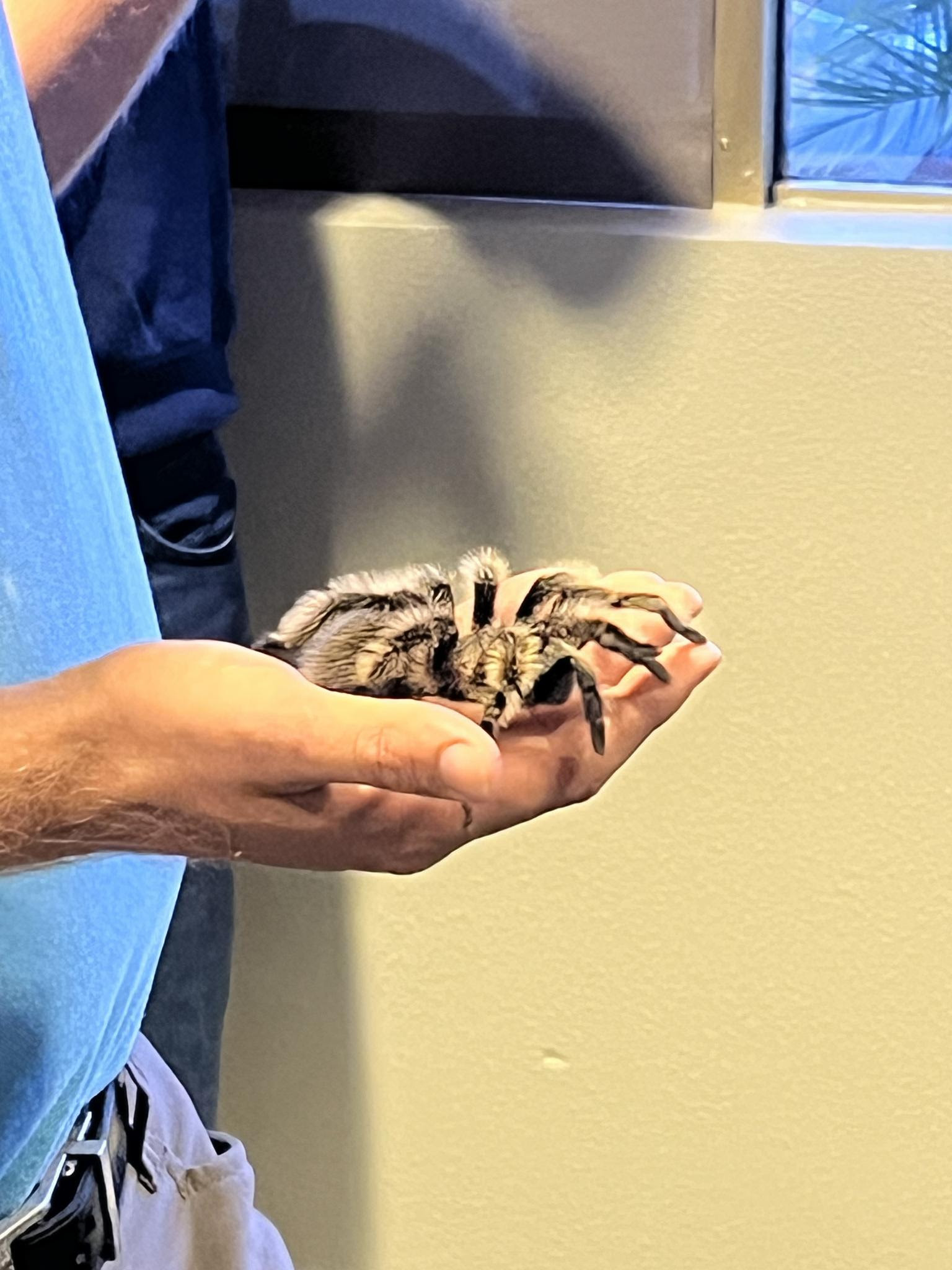
During the seminar, two animal trainers from the San Diego Zoo arrived carrying a few small surprises: a tarantula the size of my hand and a six-foot-long boa constrictor.
Each was magnificent in its own way.
The tarantula had a dark, thick, hairy body and long, prickly legs.
He rested on the trainer’s outstretched hand, peering out at the small crowd as some of us edged closer for a better view. Others stayed back, close enough for a clear (and safe) line of sight.
And a few, at the mere mention of a large, hairy spider and a massive snake in the room, bolted for the door.
The Picture in Your Head
One of the techniques in NLP is to clarify the pictures you create in your mind. Let’s try it.
As you read this, take a second to picture the tarantula I described.
What do you see? How big is the spider? Is it close to you or far away? Is the picture in color or black and white? Is it moving like a movie, or is it a still image? Do you hear anything, like people talking or the spider’s legs clicking? Do you smell anything? How do you feel looking at it, and where in your body do you feel it?
As you answer these questions, you’re mapping how your brain represents the spider, and you’re stirring up the emotions that come with it.
The people in the room who wanted to hold the tarantula had a pleasant picture in mind before they ever saw it in the hairy flesh. The spider probably seemed harmless, maybe smaller than life and a comfortable distance away, and they felt calm.
For those with a fear of spiders, the picture was very different.
Before the tarantula even entered the room, they likely imagined it as big as a car, in vivid color, its hairy legs prickling their skin as it crawled toward their face, fangs bared.
No wonder they were afraid!
If I pictured a massive, hairy, venomous creature the size of a car crawling up my leg to devour my face, I’d be terrified, too.
But that’s the point. The spider isn’t the size of a car, and it has no interest in anyone’s face. It’s just a spider.
It isn’t the spider that scares them. It’s the picture in their mind.
Picture This
Your fear may have nothing to do with a creature.
Maybe you’re dreading an upcoming conversation. Maybe you’re procrastinating on something, you can’t stand being in the same room as your father-in-law, or you’re frustrated with part of your life and don’t know how to change it.
Whatever your challenge, the picture you’re holding in your head probably isn’t pleasant. That picture is your representation, your map, of the situation.
Change the picture, and you change your relationship to the situation.
Try this simple technique now or after you finish reading.
- Picture it. Bring the challenge, spider, or person to mind.
- Map it. Is the picture big or small? In color or black and white? Does it have texture? Are you watching yourself from the outside, or seeing it through your own eyes? Is there sound, or is it silent? What do you feel in your body, and where?
- Tweak it. Shrink the picture to the size of a postage stamp or a penny. Push it farther away. If it’s in color, make it black and white. If it’s already black and white, make it blurry. If there’s sound, turn the volume down or off.
- Notice. Think about your challenge again. How do you feel now?
You may notice you feel differently about it. That’s because your mind has changed how it represents it.
“I Want to Do it Again”
At the seminar, we watched our instructors use techniques like this one to help several people with their fear of spiders or snakes.
The results were astounding.
One woman who could barely stay in the room was holding the snake just minutes later. After she handed it back, she wanted to hold it again.
Others had similar shifts.
I’m not sharing this to minimize your fear or your challenge in any way. This is just one of many tools, and for deep fears or trauma, working with a qualified professional makes all the difference.
But the message is clear.
If you’re struggling with something in your life, try changing the picture of it in your head.
It’s one more way to close the gap between where you are and where you want to be.
I’m a keynote speaker, life counselor, and executive coach. If your organization or company is looking for a speaker for your next event, or if you’re working through a particular challenge and wish to work one-on-one with me, please reach out!
I wish you thriving health, and friendly spiders, David