There’s a voice in your head, and it’s constantly talking to you. But, is it friend or foe?
For many of the athletes, the answer to that question was on full display at this year’s French Open.
It was loaded with drama, but it also highlighted one of our biggest challenges as athletes, leaders, and humans: overcoming the demons that live in our heads.
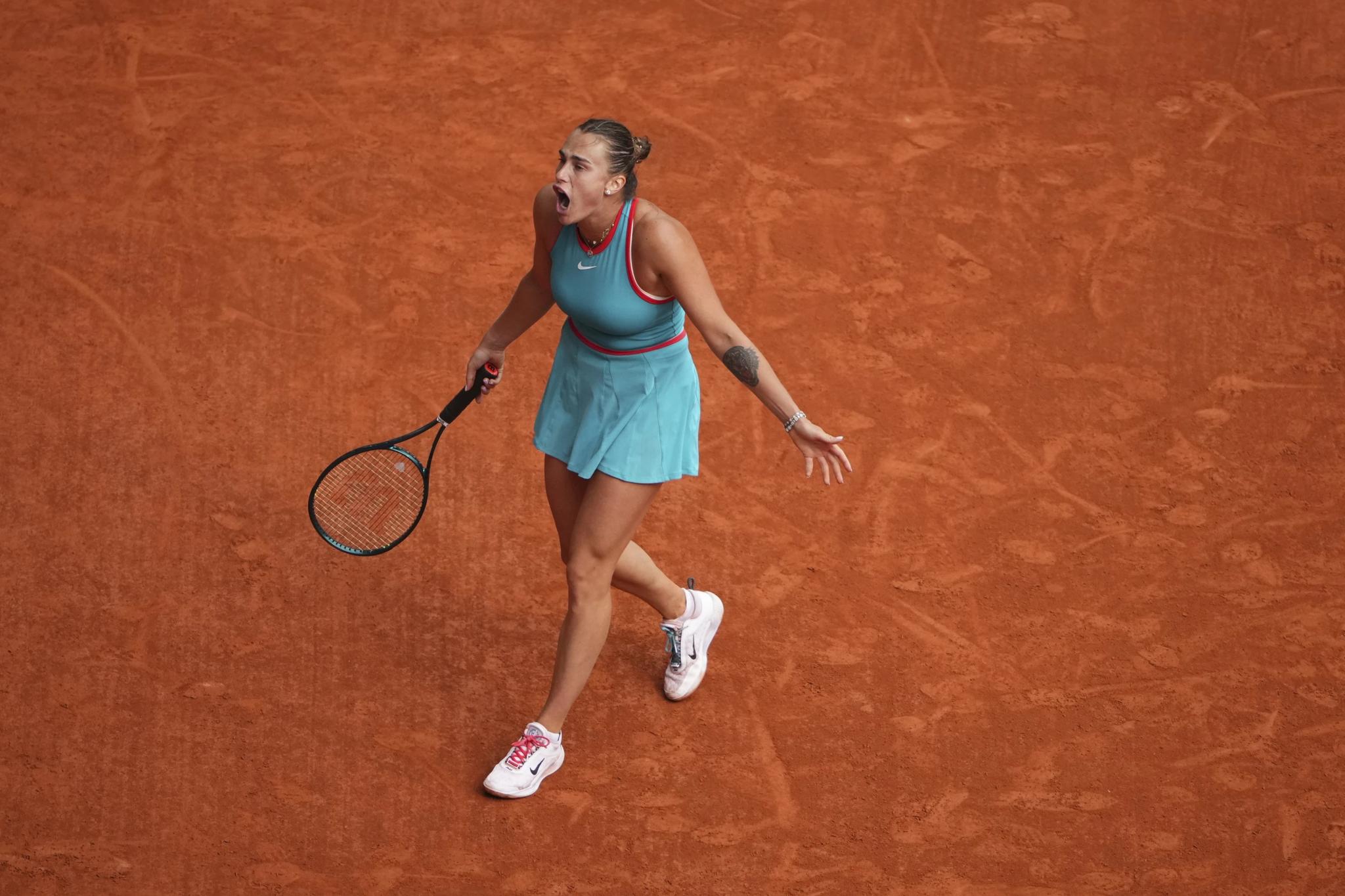
We watched several players succumb to theirs over the course of two weeks, but perhaps the most visible collapse came from Aryna Sabalenka.
Sabalenka – the top ranked women’s player – was up a set and 5-3 against a qualifier in the semifinals. The match was all but over until she let the wrong voice dominate, and she lost ten straight games to lose the match.
It was one of the most notable self-destructive upsets in the history of the tournament. (No judgement, only sympathy… I let the demons in my head sabotage countless would-be successes on much smaller and inconsequential stages).
Though this was one of many incidences of an athlete being overcome by destructive thoughts, there were also beautiful moments of perseverance.
The eventual women’s winner, Mirra Andreeva, almost let her anger and negative self-talk yank her out of the third round, but after a team pep talk, she rode her positive thoughts all the way to the title.
Then there was Sasha Zverev, who was billed as the best men’s player to never win a major.
His demons were doubt, nerves, and hesitation, and they’ve reared their gruesome heads on more than one occasion in moments he seemed destined to win only to drag him down into another devastating defeat.
But this time, he conquered all of them by prevailing in five tough sets to finally hoist the trophy.
Stress, nerves, doubt, fear, negative self-talk, pressure.
These inner opponents are always on full display in every sporting event, whispering little lies that drag athletes into quicksand of their own making.
But they aren’t only in athletes. They’re in all of us.
Gap Insight: Your inner voice comes from a myriad of places – your past, your conditioning, your ego expressing your worries and fears. Wherever it comes from, it behooves you to be conscious of whether that voice is helping you or hurting you.
The Monkey in Your Mind
So, here’s the question…
What does the demon in your head whisper?
“I’m too old. I’m not good enough. If it weren’t for ‘so and so’, I’d be happier. I’ll be a nobody if I don’t succeed. I just can’t catch a break. Poor me. This person is keeping me down…”
These are the common repetitive stories, and lies, in our heads. They are doubt, fear, blame, self-pity, and other unhelpful opponents.
If you let them, they will win every single time.
Buddha referred to these voices as the Monkey mind. “Monkey” refers to the tendency of the brain to endlessly swing from one worry, regret, or idea to the next, much like a monkey wildly leaping from branch to branch. He defined it as a state of restlessness, distraction, and uncontrollable chatter in your thoughts.
So how do you – as a leader, an athlete, a parent, or a romantic partner – overcome them?
Gap Insight: Without conscious intervention and deliberate intention, your monkey mind will rule the roost, and your results.
How to Stick a Pitchfork in Your Demon
The good news is you don’t need years of meditation or a sports psychologist to tame your mind. You need four steps and the willingness to pay attention.
Here’s a quick process to quiet your monkey mind and silence the demons inside:
- Be aware of the voice. There’s always a running dialogue in your head. Tune into it, listen to what it has to say. Buddhism teaches that this voice is a conditioned construct rather than your true self, and that spiritual awakening begins when you realize you are the awareness listening to the voice, not the voice itself.
- Ask who’s doing the talking. Have you ever asked yourself who’s talking? Who is this voice in your head seeding doubt? Sometimes, it’s the inner judge. The judge weighs your value and compares you to others while offering unsolicited opinions about your looks, ability, and worthiness. Other times, it’s Debbie Downer, always quick to take the sails out of a positive situation or opportunity. Often, it’s your ego trying to make sense of the outside world while putting a negative spin on it. Whatever voice it is, it’s either helping you or hurting you – there is no in-between.
- Give the voice a name. Giving it a name sheds light on it and gives you some levity over it, especially if you make it comical. Maybe it’s “Judgy Janet”, “Rarely Right Rex,” or “Bugs Bonehead”. My destructive voice is “Devilish David.” It tells me I can’t… Anything. Become a best-selling author, still play decent tennis, help leaders thrive, remain active and fit until my dying days, win… Devilish David has no bounds. He can bite anytime and anywhere. But I recognize him now, and I quickly call him on his lies and dismiss him. You can, too. As soon as you recognize the voice and give it a name – like a demon in a horror movie – you hold power over it, and don’t have to be pulled in by its lies.
- Insert your own cheerleader. The final step is to intentionally insert your own positive voice in your head. “I can do this.” “I’m going to do this.” “I’m ready for success.” I call it the cheerleader because it always encourages you to succeed. It also helps to list all the reasons you CAN win, lead, learn, or thrive, especially in the face of an inner voice that’s constantly listing the reasons you can’t. The cheerleader makes everything positive, directs your thoughts toward the outcome you want rather than the one you fear, and keeps repeating them until you believe it in your soul.
Gap Insight: Which voice you listen to – the judge, the downer, or the cheerleader – is completely up to you. When you consciously choose the latter, you begin to align yourself with success.
Final Thoughts
The outer scoreboard doesn’t tip in your favor until you win the inner battle.
Sabalenka lost that battle this time. Zverev and Andreeva won it. You can, too.
So here’s your assignment…
The next time you feel yourself tightening up, focusing on the downside of a situation, or judging yourself, recognize your demon and give it a name. They’re telling you a story that isn’t true.
Then tune into your inner cheerleader and give it a voice – your voice – the one that drives you towards the outcome you want, not the outcome you fear.
This is how you become a champion in the arena of sports, leadership, and life. It’s the difference between the life you’re living and the one you’re capable of.
And every time you win that battle, you begin to close the gap – one intentional thought at a time.
Yours in health and winning the inner battle,
David
The mirror-image of this is Your Life Is Giving You Feedback. Are You Listening?
FAQ
What do you mean by the “voice in your head” being friend or foe?
It’s the running internal commentary — doubt, fear, self-pity, blame — that either helps you perform or actively sabotages you. Watch any Grand Slam and you’ll see both outcomes play out live: one player loses ten straight games to the voice, another rides hers all the way to a title.
How do you quiet negative self-talk?
Notice the voice is there and separate from you. Ask who’s actually talking — the inner judge, the ego, old conditioning. Give it a name to take some power away (mine’s “Devilish David”). Then deliberately insert a cheerleader voice that argues for the outcome you actually want.
Is negative self-talk just a personal weakness?
No, and I say that with sympathy, not judgment — I’ve let my own demons sabotage plenty of would-be wins on much smaller stages than a Grand Slam. The goal isn’t to never hear the voice. It’s to recognize it fast enough that you get to choose which one — the demon or the cheerleader — actually drives.

