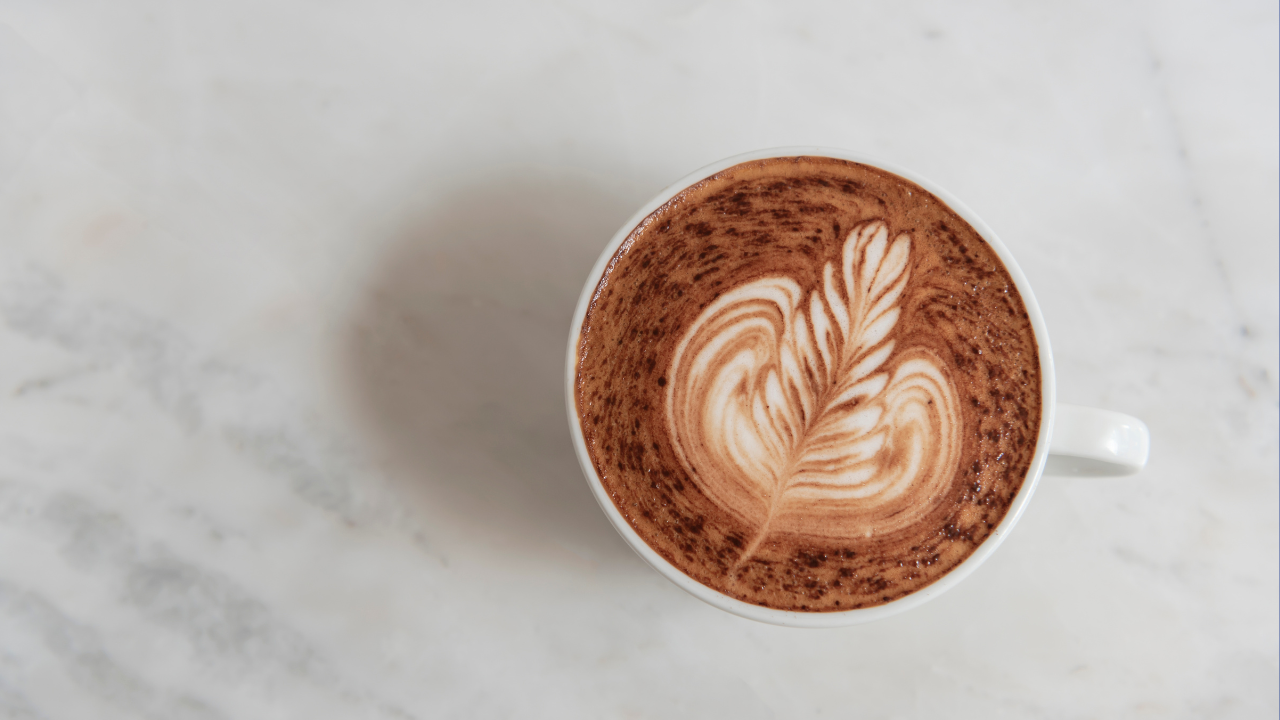
I realized very late in life that I like a good mocha in the morning.
Hot chocolate with a hit of espresso hits the spot in such a gratifying way.
There’s only one problem — I don’t do well with caffeine. At all.
I get dizzy, my heart races, and I feel immediately wired in a really unpleasant way. And no matter how early I drink it, my deep sleep takes a serious hit for at least two nights — even with decaf, which always seems to have more caffeine than advertised.
My Oura ring doesn’t lie. My deep sleep is cut in half every time.
But, despite all of that, it’s still tempting because it tastes sooo good.
Then I remind myself that it’s a choice. If I drink that mocha, my health suffers. Half the deep sleep means:
- Half the immune recovery
- Half the cellular repair
- Half the brain’s nightly detox process
- Less energy for everything I actually care about the next day
Over months and years, that’s going to leave a mark. One I could have avoided.
And I’m reminded daily that taking responsibility for your health isn’t always dramatic or heroic; it’s just a quiet, honest reckoning with what things cost, and whether they’re worth it.
Gap Insight:
Not doing what you know you “should” do isn’t a character flaw — it’s inertia, past conditioning, and most importantly, a function of your wiring.
The Shoulding vs. Doing Gap
We almost always know what we should do. Exercise more. Sleep better. Eat cleaner. Have the hard conversation. Leave the relationship that’s been draining us for years. Put the phone down. Ask for help.
We know, and yet, there’s usually a gap between our should-do’s and actual do’s. Science backs this up:
- Seventy percent of smokers say they want to quit but don’t, despite knowing the consequences.
- More than 97% of Americans don’t follow a healthy lifestyle.
- In one study of over 2,000 Americans, when asked whether they’d give up an unhealthy habit in exchange for ten more years of life, more than half said no. That includes drinking, smoking, and eating processed food.
Ten extra years of life. And still no.
So, the question isn’t whether we know. We know. The question is why knowing isn’t enough.
Gap Insight:
When you know what to do but don’t do what you know, you remain stuck, and it eats away at some part of you — your self-esteem, identity, or your health.
Why We Remain Stuck
1. We’re wired for right now.
The nervous system runs on immediate feedback. Dopamine, pleasure, and a sense of relief are instantaneous rewards, and the brain is extraordinarily good at prioritizing them over abstract future benefits.
That’s why the mocha is so hard to resist. Trading it this morning for better sleep over the next few days requires overriding millions of years of biological programming. It feels like weakness, but it’s evolutionary neuroscience.
2. Change can seem risky.
Change, even positive change, registers as risk to the nervous system. The unknown on the other side of a new habit, a healthier relationship, or a different way of living feels genuinely threatening, even when the current situation is clearly harmful.
Familiar and safe feel the same to the body, even when familiar is slowly hurting you.
3. Full responsibility is genuinely uncomfortable.
Taking 100% ownership of your physical, mental, and emotional health isn’t always easy, and doesn’t always feel good right away.
You might actually feel lonely after leaving a bad relationship. You might feel worse before you feel better as your body shifts out of addiction. You might grieve the loss of whatever you gave up.
That discomfort is real. Acknowledging it isn’t making excuses; it’s understanding what you’re actually up against.
Gap Insight:
The gap between knowing and doing is one of the most universal experiences there is. The question is: what are you going to do about it?
How to Close the Gap
1. Stop shoulding all over yourself, and start wanting.
“Should” is one of the most deflating words in the English language. It carries the weight of obligation, guilt, and external judgment. Nobody gets fired up by “I should exercise more.”
But want is different. Want has energy. Want has direction.
Get clear on what you actually want. You want to feel strong and capable in your body. You want to wake up restored. You want a relationship that actually nourishes you. You want to be fully present for the people you love. You want to look back at this chapter of your life without regret.
When you lead with want instead of should, you stop fighting yourself and start moving toward something that truly matters to you.
2. Get brutally honest about what staying the same is costing you.
Not theoretically. Specifically.
What is this habit, this pattern, this relationship, this choice actually costing you right now? Energy? Health? Peace of mind? Time? The slow erosion of something you used to love about yourself?
For me, the mocha was costing deep sleep, which was costing recovery, which would eventually cost everything I care about — my health, my focus, my presence, my ability to do the work I love. Written out like that, it stops being tempting and starts being obviously not worth it.
Write it down. Make it real. The cost of staying the same is almost always larger than it feels in the moment.
3. Find a reason that’s bigger than the habit.
Willpower is a limited resource. But a compelling reason is not. When the reason is big enough, personal enough, urgent enough, connected to something that genuinely matters to you, change that seemed impossible becomes almost inevitable.
My mother smoked for fifty years. Decades of family members begging her to stop. Nothing worked. Then her doctor told her it was causing her high blood pressure and putting her at real risk of an early death. That was her reason. Not smoking itself or the fact that it drove us all crazy — the high blood pressure. Within days she quit. After fifty years.
It doesn’t have to be rational. It just has to be real to you. Find the reason that makes staying the same feel more dangerous than changing. Then hold onto it every time the old pull shows up.
4. Make the new behavior easier than the old one.
Environment shapes behavior more than motivation does. If chocolate chip cookies are on the counter, they’re going to be eaten. If they aren’t, they won’t be. If your running shoes are by the door, you’re more likely to use them. If your phone charges in another room, you’re less likely to reach for it at midnight.
Don’t rely on willpower to overcome a bad environment. Design the environment so the better choice is the path of least resistance.
5. Replace, don’t just remove.
The nervous system abhors a vacuum. When you remove a habit without replacing it, the discomfort of the absence will eventually pull you back. The craving isn’t just for the thing; it’s for the state the thing produces. Calm. Relief. Pleasure. Stimulation.
Find what the habit is actually giving you, and find a healthier way to get there. I often replace the mocha with a healthy and delicious smoothie, a ritual I actually look forward to. It scratches the itch without the cost.
Gap Insight:
The moment you step toward what you want, you step into your real power — the power to choose for yourself and then act on that choice to make something in your life better.
The Bottom Line
The gap between knowing and doing is one of the most human experiences there is. It’s not a character flaw, and it isn’t laziness. It’s biology, wiring, and the very understandable human preference for comfort over uncertainty.
But it can be closed.
Not through shame, willpower alone, or by shoulding yourself into exhaustion.
Through honesty. Through a reason big enough to move you. Through want instead of should. Through designing a life where the better choice is also the easier one.
The mocha still smells amazing, but I know what it costs, and that’s enough.
What’s one thing you’ve been shoulding all over yourself about, and what do you really want instead?
Sit with that question this week. The answer might surprise you.
Yours in health inside and out,
David
I revisit this exact gap — with the same mocha story — in What My Dog Olive Taught Me About High Performance.
FAQ
Why do we know what’s good for us but still don’t do it?
Three reasons: the nervous system is wired to prioritize immediate reward over an abstract future benefit, change registers as risk to the body even when the current situation is clearly worse, and taking full responsibility for your health or habits is uncomfortable — not just inconvenient, uncomfortable.
How do you actually close the gap between knowing and doing?
Replace “should” with “want” — should just carries guilt, want has energy. Get specific about what staying the same is costing you. Find a reason bigger than the habit. Make the better choice easier by changing your environment. And replace a habit instead of just removing it.
What’s an example you use to explain this gap?
My own mocha problem. I know caffeine wrecks my deep sleep — my Oura ring proves it every time — and it’s still tempting, because the pull toward immediate pleasure beats an abstract future cost almost every morning. It’s not a problem I solved once. It’s a choice I keep making on purpose.

